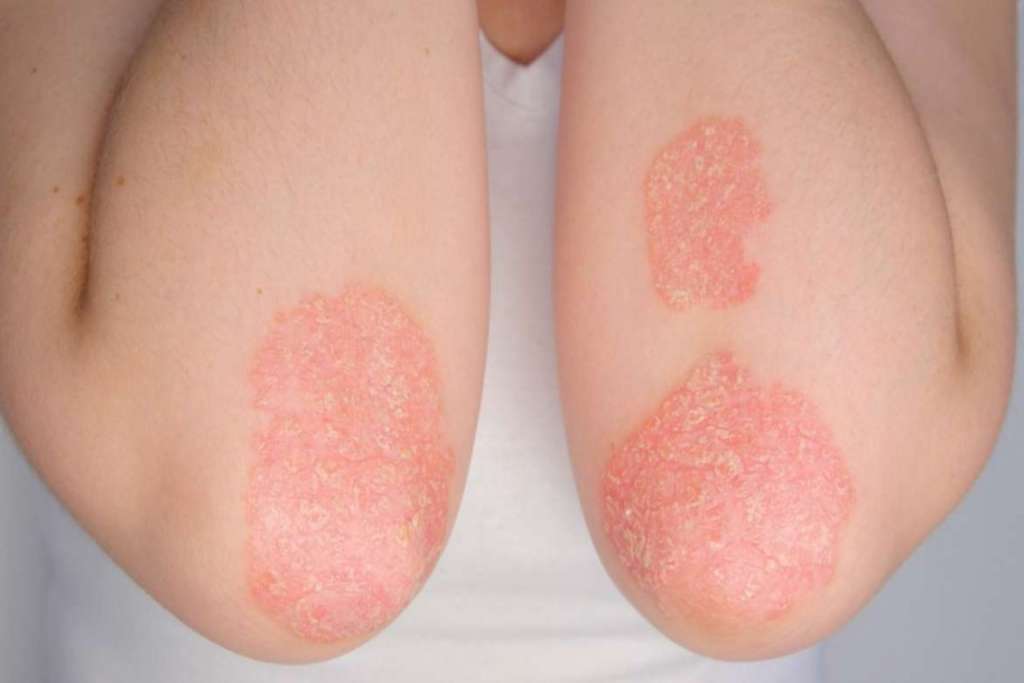
Rilidigital – Friend Rili, know psoriasis and how to treat it. Psoriasis is a chronic skin condition that causes the growth of skin cells quickly and excessively. This leads to a buildup of dead skin cells that form thick patches, scaly, and sometimes itching. These patches are generally red or reddish and can be accompanied by silver scales.
Psoriasis occurs when a person’s immune system mistakenly attacks healthy skin cells, which cause inflammation and accelerate the production of new skin cells. The exact cause is not yet fully known, but genetic and environmental factors are considered to play a role. Stress, infection, cold weather, or certain drugs can trigger or worsen the symptoms.
There are several types of psoriasis, including:
- Psoriasis plaque: The most common type, marked with scaly red spots.
- Psoriasis Guttate: Usually appears as small red dots on the body, often triggered by throat infections.
- Inversion psoriasis: Appears in the folds of the skin, like under the arms or groin.
- Pustular psoriasis: Marked with blisters containing pus.
- Eryrodermic psoriasis: Forms that are less frequent and serious, causing the skin to redden and peel off throughout the body.
Psoriasis cannot be cured, but there are various treatments for managing its symptoms, including topical creams, light therapy, and systemic drugs.
Psoriasis treatment
Psoriasis treatment aims to reduce symptoms, control inflammation, and slow the growth rate of skin cells. Although psoriasis cannot be cured, there are several treatment options that can help manage this condition. Psoriasis treatment can be divided into three main categories: topical (cream or ointment), light therapy (phototherapy), and systemic drugs.
1. Topical treatment
Topical treatment is one of the most common ways to deal with mild to moderate psoriasis. Several types of topical treatment include:
- Corticosteroid cream or ointment: Topical steroids are the main treatment used to reduce inflammation and itching. Steroids with stronger strengths are used for thicker or worse areas.
- Analog Vitamin D.: This drug contains compounds that are similar to vitamin D, which helps slow the growth of skin cells. Example: Calcipotriene (Dovonex).
- Tazarotene: This is a topical drug based on retinoids (vitamin A derivatives) that helps regulate skin cell growth.
- Tal: Used to reduce inflammation and control symptoms. This is more often used in the form of shampoo or ointment.
- Calcineurin inhibitors (such as tacrolimus and pimecrolimus): This cream helps reduce inflammation and itching, but is usually more recommended for psoriasis in sensitive areas such as the face or skin folds.
2. Light therapy (phototherapy)
Phototherapy is a treatment method that uses ultraviolet (UV) rays to treat psoriasis. Some forms of light therapy include:
- UVB Narrowband: This therapy uses UVB light with a certain wavelength to reduce inflammation and slow the growth of skin cells. Usually done several times a week under the supervision of a doctor.
- PUVA (PSORALEN + UV-A): This therapy combines psoralen drugs (which increases the skin to UV rays) with UVA light. This is more often used for more severe psoriasis.
3. Systemic drugs
For more severe psoriasis or when topical treatment and phototherapy are ineffective, the doctor can prescribe systemic drugs that work throughout the body. These drugs include:
- Oral medicine:
- Metotrexate: Reducing inflammation by pressing the immune system. This drug is used for more severe or difficult psoriasis to treat with other methods.
- Acitretin: Oral retinoids that help slow down skin cell growth. Usually used in cases of pustular or erythrodermic psoriasis.
- Cyclosporine: Immunosuppressants that reduce the activity of excessive immune systems, helps control the symptoms of psoriasis.
- Biological: Biological drugs are drugs that are infected or given through infusion and work by targeting the immune system. Biological drugs are used for severe psoriasis and include:
- Adalimumab (Humira)
- EtanaCept (Enbrel)
- Infliximab (Remicade)
- Utekinumab (Stelra)
- Secukinumab (CoStyx)
This biological drug inhibits certain parts of the immune system that causes inflammation so that it can help reduce the symptoms of psoriasis.
4. Supporting care
- Soft skin care: Use regular moisturizers to prevent dry and chapped skin. Products containing urea or salicylic acid can help remove scales and hydrate the skin.
- Oatmeal baths: Soak in warm water with oatmeal can help relieve itching and inflammation.
- Loose clothes: Avoid tight or rough clothing, which can cause irritation or friction on the skin.
5. Changes in lifestyle
In addition to medical treatment, lifestyle changes can also help control the symptoms of psoriasis, including:
- Manage stress with relaxation or meditation techniques.
- Avoid alcohol and smoking, which can worsen psoriasis.
- Avoid excessive exposure to the sun or extreme weather, which can worsen the condition.
- Follow a healthy diet and maintain ideal body weight, because obesity can worsen the symptoms of psoriasis.
The selection of psoriasis treatment depends on the severity of the body’s condition and response to treatment. For effective treatment, it is recommended to consult a doctor or skin specialist who can prescribe the most appropriate treatment.
Posting display: 105
Game Center
Game News
Review Film
Rumus Matematika
Anime Batch
Berita Terkini
Berita Terkini
Berita Terkini
Berita Terkini
review anime
Gaming Center
Originally posted 2025-05-22 17:36:41.